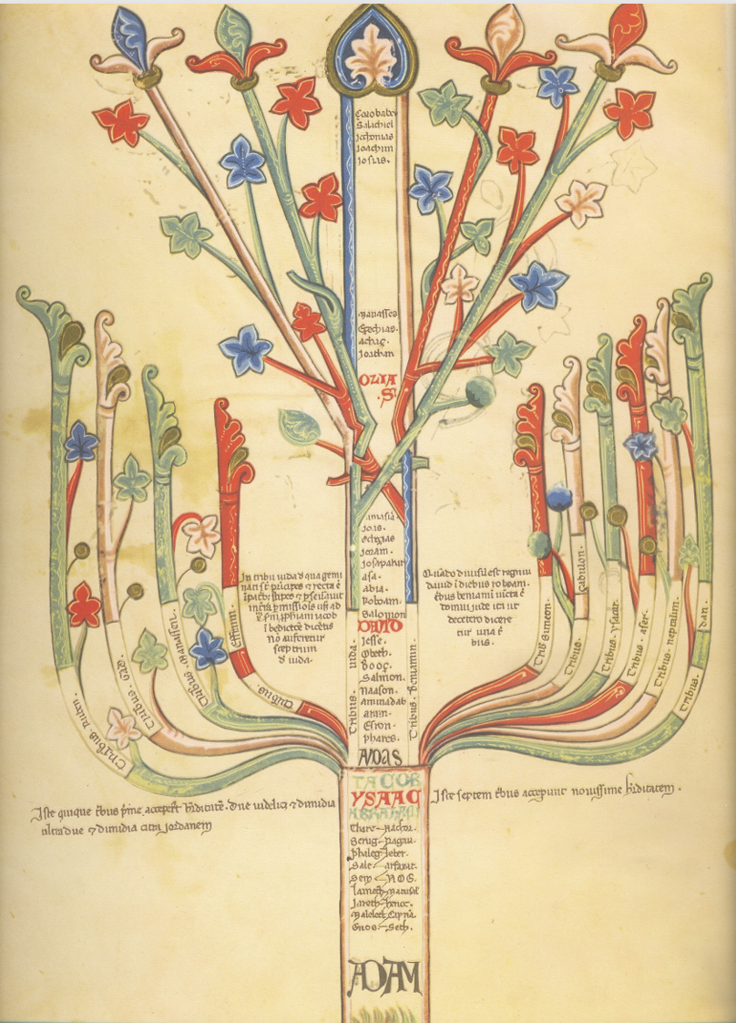
International Medieval Congress, Leeds. I presented a paper on the historical predictions of the Calabrian abbot Joachim of Fiore, arguing that what we today call his “mystical prophecies” could just as well be treated as “scientific investigations” in the medieval sense of the word. Or maybe even in a modern sense, since the basic structure of these predictions followed a still valid academic methodology. They were based on a literary corpus generally accepted by the community of scholars as a reliable source (in this case, the Bible, the historical accuracy of which would not be questioned until the early modern age); they used mathematical tools to establish connections between different sets of evidence; and they expressed their conclusions in the form of general laws.
The reason why we today reject these conclusions is not that they were totally irrational or unscientific (“religious” or “mystical”), but that we find faults in their use of sources, their mathematical procedures, or the way in which their findings were generalized. But these criticisms remain within the realm of science. If the criterion of scientific propositions is that they are falsifiable (see Karl Popper), then these propositions were just as scientific as they were – as it turned out later – utterly false.
But beautiful none the less.